
HEALTHY INDIA OZONE INDIA
Ozone
Ozone is a triatomic form of oxygen, meaning that the molecule, ozone, is made up of 3 oxygen atoms. Ozone is an unstable gas that readily decomposes to oxygen naturally. Ozone is also a highly reactive gas that acts as a very strong chemical oxidant. Ozone also has a distinct odor that is noticeable at very low levels has a very pungent odor
Ozone removes 99.99% of harmful water/airborne microorganisms
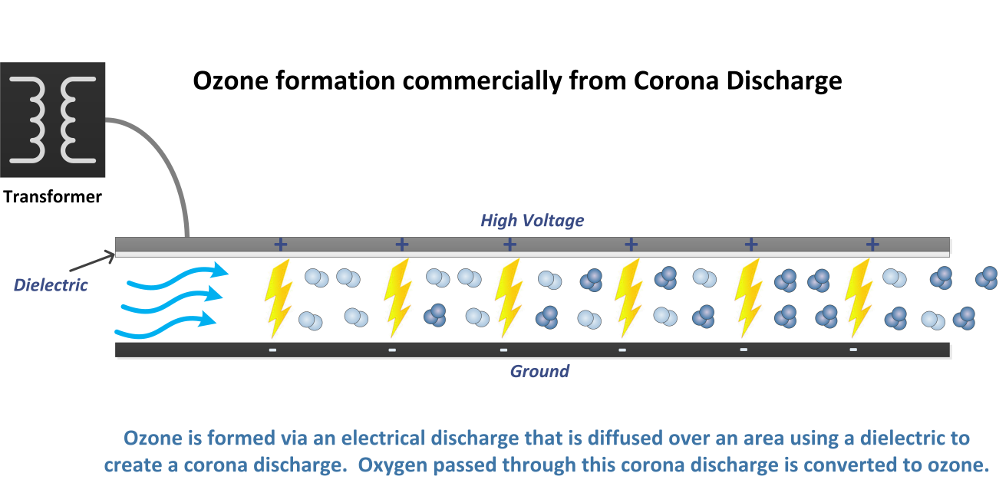
Commercial Ozone Production from Electrical Discharge
The most common method of producing ozone commercially and industrially is an electrical discharge or corona discharge. A corona discharge is simply a diffused spark through a dielectric to spread out that electrical discharge to a large area for maximum efficiency.
3 O2 ⇌2 O3
UNITS OF MEASURE
Abbreviations For these formulas
g/hr Grams per Hour
ppm Parts per Million
pphm Parts per Hundred Million
ppb Parts per billion
mg/hr Milligrams Per Hour
Dolph Liters per minute
CONVERSION FACTORS
| 1 ppb | = 0.001 ppm |
| 100 pphm = | 1 ppm |
| 1000 liters = | 1 m3 |
How Does Ozone Disinfection System Work
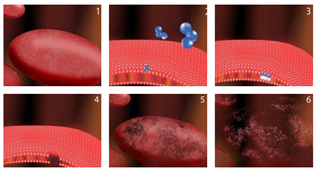
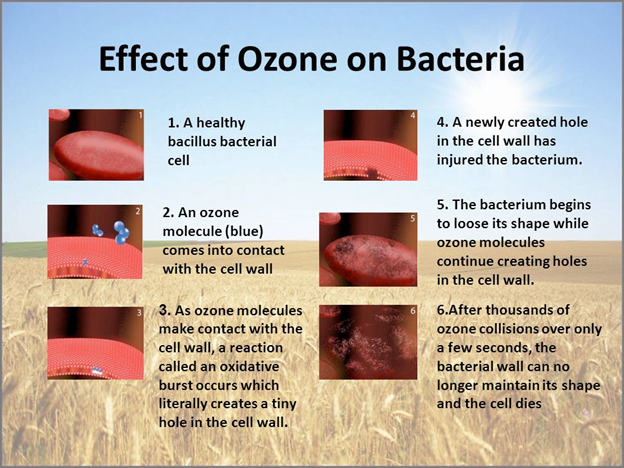
Ozone kills bacteria by destroying the cell wall of the bacteria Once the cell wall is destroyed, the bacteria will be unable to survive
Ozone for Disinfection and inactivation of pathogens
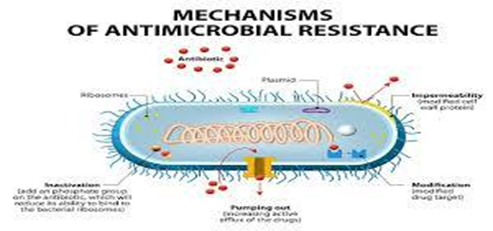
Bacteria – Ozone interferes with bacterial cell metabolism, probably by inhibiting the enzymatic control system. A sufficient amount of ozone breaks through the cell membrane, destroying the bacteria
- Aeromonas harveyi NC-2,
- Aeromonas salmonicida NC-1102
- Bacillus anthracis,
- Bacillus cereus,
- Bacillus coagulans,
- Bacillus globigii,
- Bacillus licheniformis,
- Bacillus megatherium sp.,
- Bacillus paratyphosus,
- Bacillus prodigiosus,
- Bacillus subtilis,
- Bacillus
- stearothermophilus
- Clostridium botulinum,
- Clostridium sporogenes,
- Clostridium tetoni
- Cryptosporidium
- Coliphage
- Corynebacterium
- diphthriae
- Eberthella typhosa
- Endamoeba histolica
- Escherichia coli
- Flavorbacterium SP A-3
- Leptospira canicola
- Listeria
- Micrococcus candidus,
- Micrococcus caseolyticus KM-15,
- Micrococcus spharaeroides
- Mycobacterium leprae,
- Mycobacterium tuberculosis
- Neisseria catarrhalis
- Phytomonas tumefaciens
- Proteus vulgaris
- Pseudomonas aeruginosa,
- Pseudomonas fluorscens,
- Pseudomonas putida
- Salmonella choleraesuis,
- Salmonella enteritidis,
- Salmonella typhimurium,
- Salmonella typhosa,
- Salmonella paratyphi
- Sarcina lutea
- Seratia marcescens
- Shigella dysenteriae,
- Shigella flexnaria,
- Shigella paradysenteriae
- Spirllum rubrum
- Staphylococcus albus,
- Staphylococcus aureus
- Streptococcus C,
- Streptococcus faecalis,
- Streptococcus hemolyticus,
- Streptococcus lactis,
- Streptococcus salivarius,
- Streptococcus viridans
- Torula rubra
- Vibrio alginolyticus & angwillarum,
- Vibrio clolarae,
- Vibrio comma
- Virrio ichthyodermis NC-407,
- Virrio parahaemolyticus
Viruses
Ozone destroys viruses by diffusing through the protein coat into the nucleic acid core, where it damages viral RNA. At higher concentrations, ozone destroys the virus’ exterior protein shell so that DNA or RNA structures are affected
Fungus and Mold- It is believed that ozone destroys fungi and mold by diffusing through the fungal wall and into the cytoplasm, disrupting the organelles that direct cell function
- Aspergillus candidus,
- Aspergillus flavus,
- Aspergillus glaucus,
- Aspergillus niger,
- Aspergillusterreus,
- saitoi and oryzac
- Botrytis allii
- Colletotrichum lagenariu
- Fusarium oxysporum
- Grotrichum
- Mucor recomosus A & B, Mucor piriformis
- Oospora lactis
- Penicillium cyclopium, P. chrysogenum and citrinum,
- Penicillium digitatum,
- Penicilliumglaucum,
- Penicillium expansum,
- Penicillium egyptiacum,
- Penicillium roqueforti
- Rhizopus nigricans,
- Rhizopus stolonifer
Fungal Pathogens
- the mechanism by which ozone kills various fungi is through the destruction of organelles in the cell’s cytoplasm
- Alternaria solani
- Botrytis cinerea
- Fusarium oxysporum
- Monilinia fruiticola,
- Monilinia laxa
- Pythium ultimum
- Phytophthora erythroseptica,
- Phytophthora
- parasitica
- Rhizoctonia
- solani
- Rhizopus
- stolonifera
- Sclerotium rolfsii
- Sclerotinia
- sclerotiorum
Protozoa
The exact mechanism by which ozone kills protozoa has yet to be determined
- Paramecium
- Nematode eggs
- All pathogenic and nonpathogenic forms of Protozoa
- Chlorella vulgaris (algae)
Cysts
Parasitic cysts are of special concern in drinking water derived from surface water sources because they are unaffected by chlorine.
- Cryptosporidium parvum
- Giardia lamblia, Giardia muris
Algae
Algae in drinking water supplies release organic chemicals during normal metabolic processes and after they die. These chemicals typically do not cause human illness but do create problems of taste and odor and the potential for increased formation of trihalomethanes
- Chlorella vulgaris
- Thamnidium
- Trichoderma viride
- Verticillium albo-atrum,